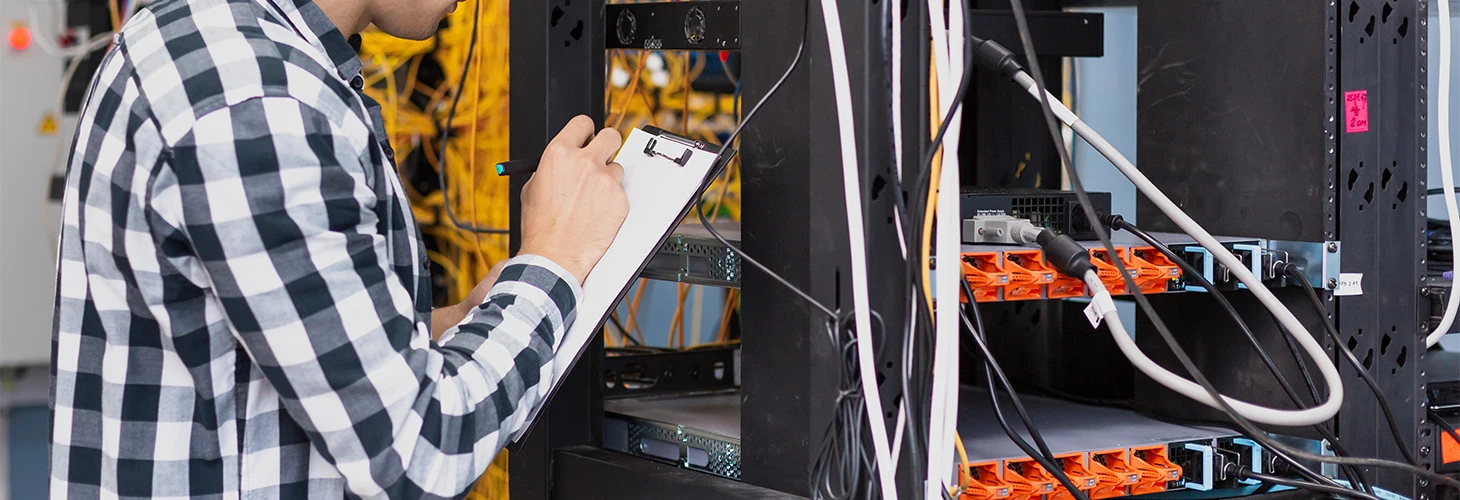

Downtime inside a commercial property rarely starts with a dramatic failure. It often begins with something small: a switch overheating, a cable degrading, a firmware update skipped, a battery not replaced.
The result can be tenant complaints, interrupted operations, delayed transactions, security gaps, or even temporary closures.
For building owners and operators, downtime affects:
- Lease performance
- Tenant retention
- Reputation
- Insurance claims
- Asset valuation
Preventing downtime is an operational discipline.
Aging Network Infrastructure
Many commercial buildings still run on network hardware installed during tenant build-outs years ago. Switches sit in closets with no ventilation planning. Firmware remains outdated. Equipment exceeds manufacturer lifecycle recommendations.
Signs of risk:
- Intermittent connectivity
- Random Wi-Fi drops
- Sluggish building management systems
- Complaints during peak usage
Replacing hardware on a lifecycle schedule costs less than emergency failure response.
Poorly Managed Vendor Stacks
Owners often inherit technology environments layered over time:
- One vendor for internet
- Another for structured cabling
- Another for access control
- Separate provider for phones
- Separate MSP for tenant IT
When something fails, no one owns the root cause. Vendors point to each other. Resolution slows.
Downtime extends.
Consolidated accountability reduces diagnostic delays and limits finger-pointing during outages.
Structured Cabling Degradation
Structured cabling is rarely inspected once walls close. Over time:
- Patch panels loosen
- Improper terminations degrade
- Labeling disappears
- Add-ons create cable sprawl
Cabling issues create intermittent outages that are difficult to trace.
In commercial buildings with multiple tenants, poorly maintained cabling infrastructure can affect shared network closets and common systems.
Periodic audits prevent compounding failure.
Access Control and Entry System Failures
Electronic access systems depend on controllers, power supplies, and network connectivity. When firmware is outdated or backup batteries degrade, systems fail unexpectedly.
Common consequences:
- Locked doors during business hours
- Unlocked entries after power fluctuations
- Audit logs unavailable during compliance reviews
Access control downtime is operational and a liability risk.
Battery replacement schedules and firmware maintenance are often overlooked.
Inadequate Power Backup Planning
Backup systems are frequently installed but not tested.
Risks include:
- UPS batteries expired
- Generator failover not tested
- Network racks without surge protection
- Phone systems without redundancy
Power instability does not need to be a full blackout to cause disruption. Brief fluctuations can reset switches, routers, and controllers.
Routine load testing and battery lifecycle tracking reduce exposure.
Unmonitored VoIP and Communications Systems
Commercial buildings increasingly rely on VoIP systems for:
- Leasing offices
- Security desks
- Maintenance coordination
- Emergency communications
VoIP failures can result from bandwidth saturation, firmware misalignment, or routing errors.
Because these systems often “mostly work,” underlying issues go unnoticed until peak demand exposes them.
Regular bandwidth assessments and configuration audits prevent sudden outages.
Why These Issues Go Unnoticed
Most downtime risks remain hidden because:
- Systems operate at reduced performance before failing
- Responsibility is fragmented
- No lifecycle documentation exists
- There is no periodic infrastructure review
Owners often discover weaknesses only after tenant complaints escalate.
A Preventative Framework for Commercial Building Owners
Downtime prevention does not require constant overhaul. It requires structure.
- Infrastructure Lifecycle Planning
Document installation dates expected hardware lifespans, and replacement schedules. - Annual Infrastructure Audit
Review network, cabling, access systems, and backup power annually. - Vendor Consolidation or Accountability Model
Assign clear responsibility for root cause diagnostics. - Backup and Failover Testing
Test UPS systems, generators, and network redundancy under controlled conditions. - Documentation Standardization
Maintain accurate diagrams, cable labeling, rack layouts, and access control maps. - Performance Monitoring
Track bandwidth usage, latency, device health, and firmware status.
Downtime prevention is process-driven, not reactive.
Final Thoughts
Downtime in commercial buildings rarely begins with a catastrophic event. It begins with overlooking infrastructure details.
Aging hardware, unmanaged vendor relationships, neglected cabling, outdated firmware, and untested backup systems are preventable failure points.
Owners who treat infrastructure as a managed asset reduce operational risk and protect revenue continuity.
If you manage or operate commercial properties and want a structured review of your building’s infrastructure risk exposure, schedule a FREE preventative infrastructure assessment. A short review can uncover hidden vulnerabilities before they impact tenants or revenue.