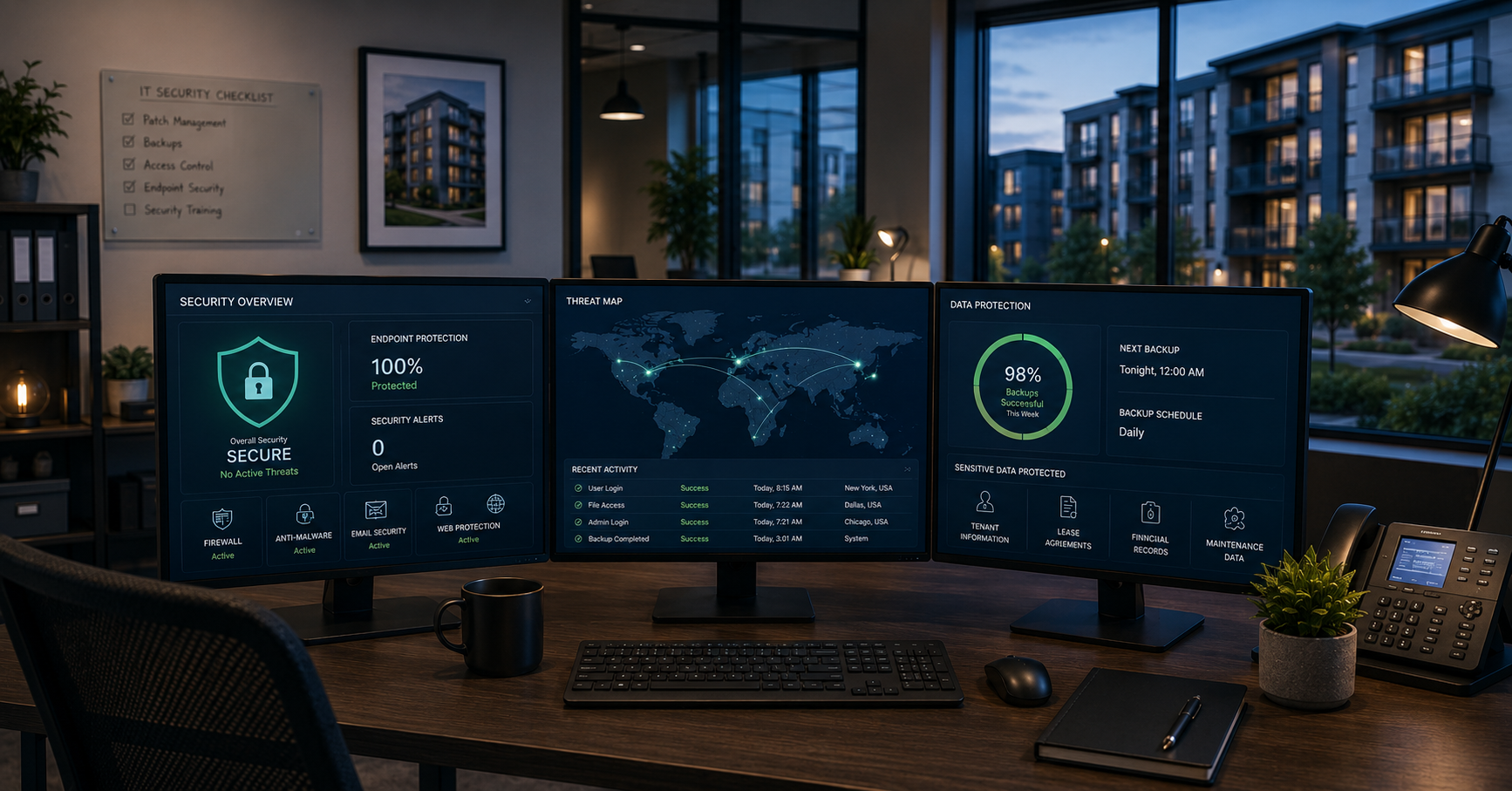

Commercial buildings run on layered systems. HVAC, access control, surveillance, tenant platforms, billing systems, maintenance tracking, and vendor services all operate simultaneously. Productivity declines when these systems function independently. Artificial intelligence can improve output across these layers, but only when it is implemented within a defined operational structure.
Where productivity is lost in commercial properties
Most inefficiencies originate from fragmented data and delayed response. Maintenance teams rely on manual reports instead of real-time diagnostics. Energy systems run on static schedules rather than occupancy patterns. Security alerts arrive without prioritization. Vendor contracts renew automatically even when services are unused. These gaps increase operating costs and extend response times.
Manual review processes also limit scales. A building team can monitor only a fixed number of dashboards, reports, and service tickets. As portfolios expand, oversight declines unless automation replaces repetitive monitoring.
What “AI done right” means in building environments
Effective AI deployment does not begin with software selection. It begins with operational definitions. Owners who see measurable gains typically follow three conditions:
- Clear performance targets such as reduced downtime or energy variance.
- Unified data sources feed into one analysis layer.
- Oversight controls that validate system recommendations.
AI fails when added as an isolated tool. Productivity improves when it becomes a decision layer that analyzes inputs from existing building systems.
Core systems where AI delivers measurable output
Predictive maintenance
Machine learning models can evaluate equipment telemetry to detect early signs of failure. Instead of replacing parts on fixed schedules, teams intervene only when performance patterns change. This reduces service calls and extends asset lifespan.
Energy optimization
AI can adjust HVAC cycles based on weather, occupancy, and historical usage. Buildings that adopt adaptive controls often reduce consumption without altering tenant comfort settings.
Security monitoring
Video analytics can flag abnormal movement patterns or restricted access attempts. Instead of reviewing hours of footage, teams receive filtered alerts requiring action.
Tenant service platforms
Natural language systems can categorize tenant requests, assign tickets, and prioritize urgent issues. Response time improves because staff handle fewer manual sorting tasks.
Portfolio analytics
For owners managing multiple sites, AI can compare performance across properties and identify outliers. This helps isolate buildings with abnormal costs or recurring maintenance issues.
Implementation structure that prevents common failures
The deployment of success depends on the sequence. Projects that begin with vendor demos often stall. Structured programs follow a defined order:
- Audit existing building systems
- Identify data sources and gaps
- Set measurable targets
- Integrate systems into a shared platform
- Test outputs on limited functions
- Scale gradually
Pilot testing limits disruption. If predictive maintenance models misclassify alerts, adjustments occur before system-wide rollout.
Data and integration requirements
AI systems depend on consistent data flow. In commercial properties, relevant inputs include:
- Equipment sensors
- Energy meters
- Access logs
- Service tickets
- Vendor invoices
- Tenant usage patterns
Incomplete or inconsistent data reduces accuracy. Integration platforms that standardize inputs improve model performance. Owners often discover that infrastructure upgrades such as network stability or sensor calibration must occur before AI analysis produces reliable results.
Cost control and ROI tracking
Productivity claims require measurement. Owners evaluating AI deployments usually track:
- Maintenance cost per square foot
- Energy cost variance
- Average response time to service requests
- Equipment downtime frequency
- Vendor contract utilization
Baseline metrics recorded before implementation allow direct comparison after deployment. Systems that cannot produce measurable deltas rarely justify expansion.
Risk, compliance, and oversight
Commercial buildings operate within regulatory frameworks covering data privacy, surveillance, and tenant information. AI tools must follow these constraints. Oversight procedures typically include:
- Access controls for system dashboards
- Audit logs for automated decisions
- Approval thresholds for high-impact actions
- Regular validation of model accuracy
Human review remains necessary. AI should filter information, not replace operational authority.
Final Thoughts
Artificial intelligence improves productivity in commercial buildings when it functions as an integrated analysis layer across existing infrastructure. Gains occur through faster diagnostics, reduced manual monitoring, and targeted interventions. Systems deployed without defined objectives or reliable data rarely produce measurable results. Structured implementation supported by clear metrics leads to operational improvements across maintenance, energy, security, and tenant services.
Schedule a FREE operational assessment today To identify where automation and data analysis can reduce costs and response times across building systems.